
How Fast Can a Crew Reach Our Story? Breaking News Filming Answered
The question producers ask us most: how quickly can a camera crew get to a developing story, and what do you get back? A plain answer from the managing producer.
The question we hear before every other one
When a producer rings us during a developing story, the first thing they ask is almost always the same: how soon can someone be there? It is a fair question, and I would rather answer it honestly than quote a figure that only holds on a quiet day. Our crews are based in Swansea, and the time it takes to reach a location depends on distance, road conditions and what the crew is already doing when your call comes in.
What I can say plainly is how we handle the call. Someone with editorial responsibility picks up, asks a handful of practical questions, and tells you within minutes whether we can send a crew and roughly when it will arrive. If we cannot cover a story properly, we say so straight away so that you can look elsewhere without losing time.
That early honesty matters more to most news editors than a promise of speed. A confident answer you can plan around is worth more than an optimistic one that slips.
What decides how quickly we arrive
Three things set the pace. The first is distance: south and west Wales are close to our base, while locations further afield mean a longer drive and, sometimes, a conversation about whether a local freelancer would serve you better. The second is crew availability. We run a small team, so if Callum is already out on another commission we will tell you, rather than stretching one operator across two jobs.
The third is the quality of the brief. A crew that knows the exact address, the likely access points, who the contact on site is and what the story needs visually will set up in minutes. A crew sent with a vague postcode and a headline spends the first part of the job simply finding its footing.
None of this is complicated, but it is the reason two stories in the same town can have very different response times. We would rather explain the reasons than hide behind a single headline number.
- Distance from our Swansea base
- Whether a crew is free at the moment you call
- How much detail you can give us about the location
What a crew actually brings to a developing story
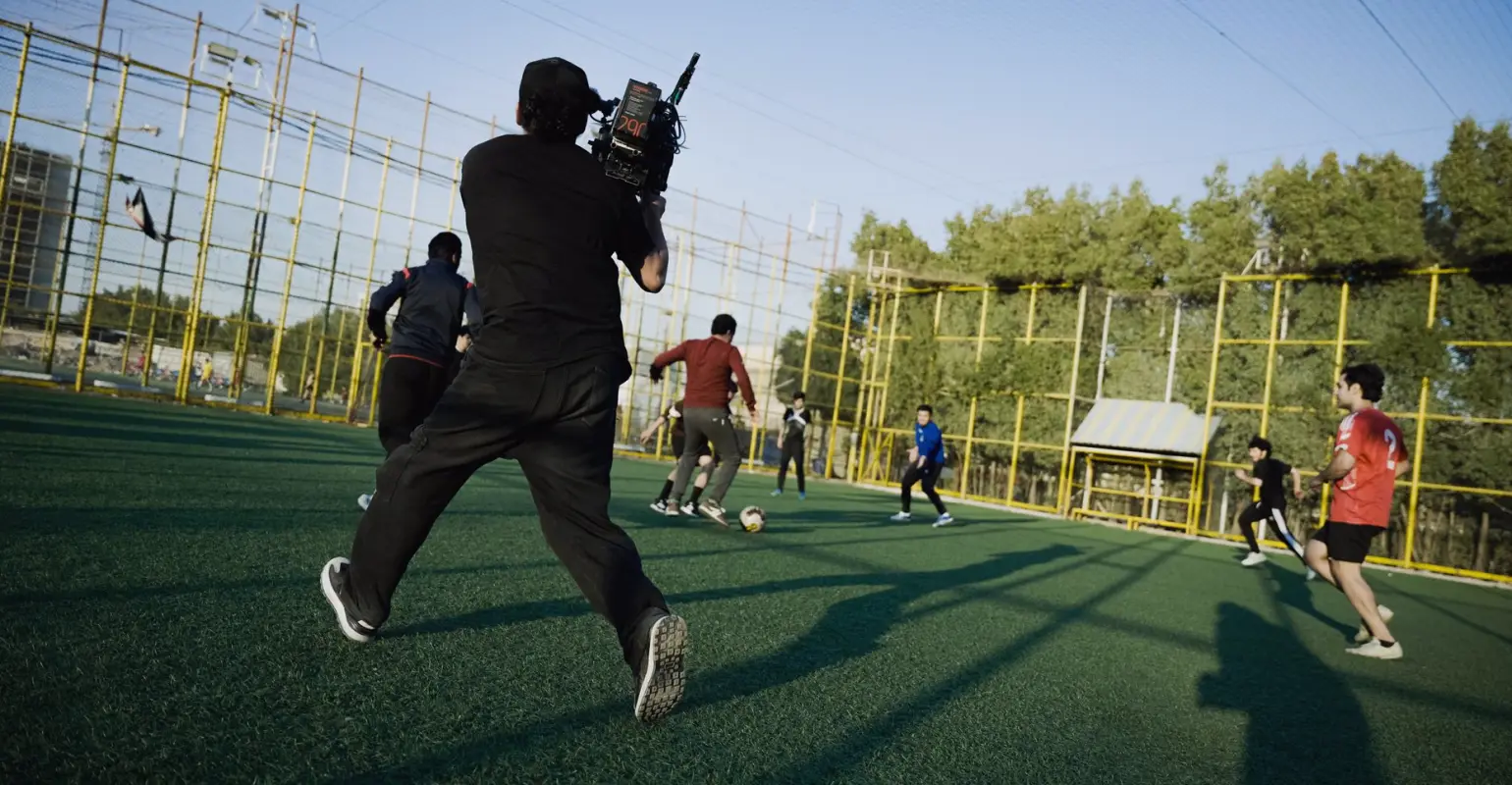
A crew arrives with a camera and tripod, wireless and cabled microphones, a small lighting kit for poor conditions, spare batteries and enough storage to shoot without worrying about running out. The aim is to be self-sufficient the moment the car door closes, because a developing story does not wait while someone looks for a power socket.
The operator shoots with the finished package in mind. That means wide establishing shots, tight detail, cutaways, a clean piece to camera if the reporter is on site, and natural sound that an editor can lay under a voice-over. Callum trains every new operator to think about the edit while the camera is rolling, since footage that cannot be cut together quickly is of little use on a deadline.
We also log what we shoot as we go, with short notes on what each clip contains, so the person receiving the material is not scrubbing through everything to find the one usable moment.
How footage reaches you and in what form
Filing is the part people underestimate. A crew can shoot excellent material and still lose the broadcast slot if the files take too long to arrive or turn up in the wrong format. Before we leave, we agree with you how you want the footage delivered, what resolution and format your system expects, and who at your end will be watching for it.
Where a connection allows, material is sent from the location in sections, so that your editor can start working while the crew is still shooting. Where it does not, the crew returns to base, and the footage is checked and sent from there. Either way, you will be told what to expect and when, instead of left waiting for a file that may or may not arrive.
Broadcast-quality footage means technically sound pictures and clean audio, delivered in a form your newsroom can use without conversion headaches.
- Delivery method agreed before the crew leaves
- Format and resolution matched to your system
- Footage sent in sections where the connection allows
What we will not promise
We will not promise that a crew can be everywhere at once, that every location is reachable, or that a story will always be shootable the way you picture it. Police cordons, access restrictions, weather and consent from people on camera all shape what a crew can capture, and a responsible crew works within those limits.
We also will not claim that speed alone makes footage good. Fairness and accuracy sit alongside it: we film what is there, we do not stage anything, and we tell you when something we shot should be treated with caution. That is part of why editors come back to us. They know what they are getting is an honest account of what the crew saw.
If a story is too sensitive or too fast-moving for us to cover well, I would rather say that on the phone than send a crew into a situation we cannot handle properly.
What to have ready when you call
A short list makes the first call far more useful. Have the exact location and the best way in, a named contact on site if there is one, a sense of what the finished item needs to show, your deadline, and how you want the footage delivered. If you are not sure about any of these, say so, and we will work through them with you.
It also helps to tell us whether a reporter will be on site or whether you need our operator to shoot alone. A piece to camera, a vox pop or an interview changes the kit we bring and the time we allow.
Prices for this kind of work are set out on our Prices page, and an enquiry through the contact page gets you a written quotation. For something urgent, ring us directly on 01792 410286 and ask for the duty producer.
- Exact location and access details
- Your deadline and delivery format
- Whether a reporter will be present
So, how fast can a crew reach your story? Quickly where distance, availability and a clear brief allow, and we will tell you plainly on the first call whether that is the case. Speed is only useful when the footage is accurate, fairly shot and sent in a form your editor can use. Ring early, give us the detail, and we will give you an honest answer you can plan your running order around.
Rhian Davies
Managing ProducerRhian has produced television news for over fifteen years and leads the editorial side of every commission.
Ask for a quote
- Call us
- 01792 410286
- By email
- hello@reportsia.net