
Studio or Location: Where Should the Interview Be Recorded?
Two ways to record an expert for television, in a sound-controlled studio or at the guest's own workplace. We compare them and say which we advise for most news commissions.
Two options on the table
A producer who needs a guest on screen usually faces the same choice: bring the person to a studio, or send a crew to wherever they work. Both produce usable television, and both have been the right answer on different days. This comparison comes from the commissions we handle from our Swansea base, and it sets out what each option gives you and what it asks of you.
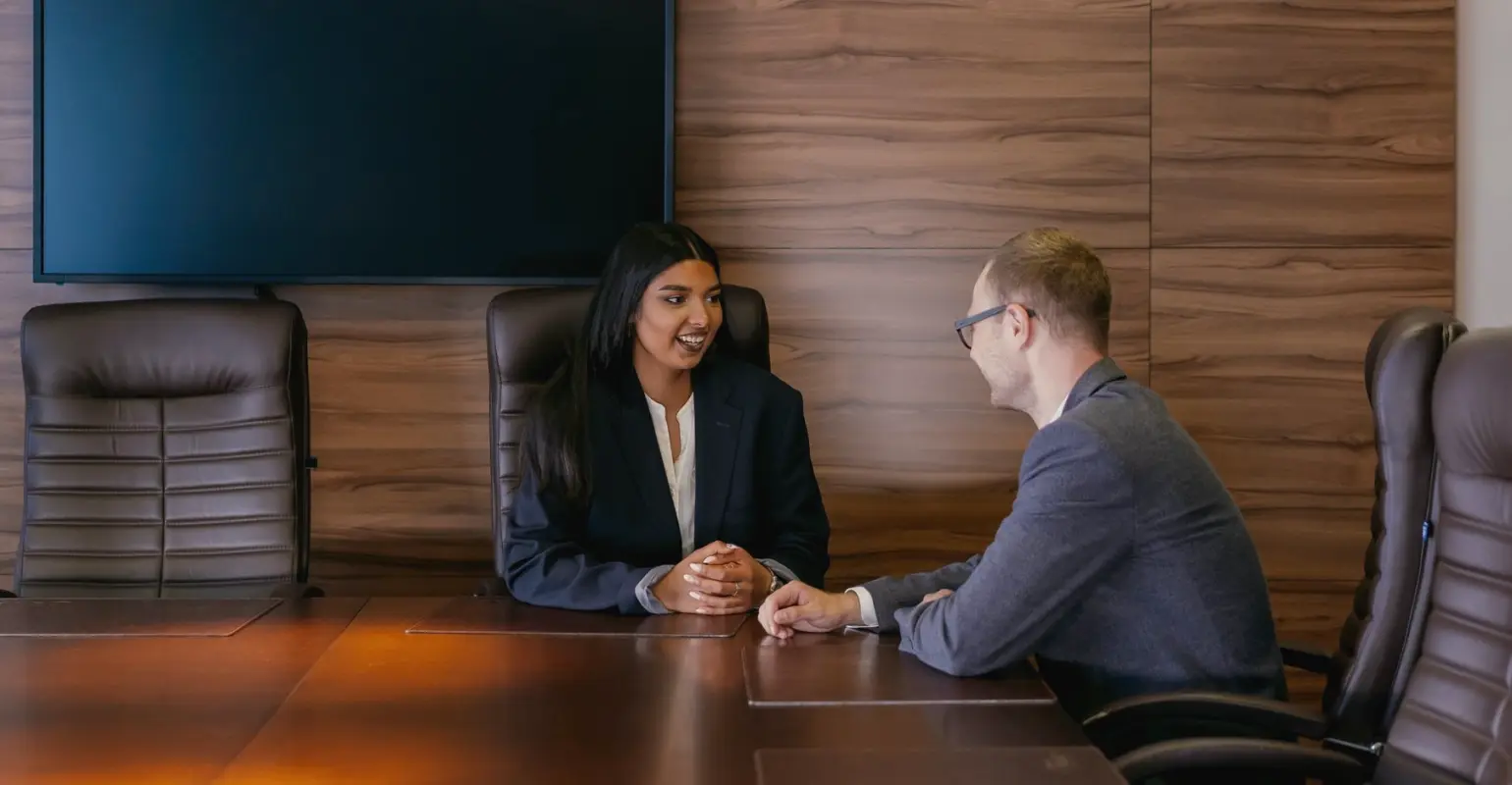
The studio option means a lit, sound-controlled room where Owen Griffiths has already set the lights, the microphones and the background before the guest walks in. The location option means a camera crew travelling to an office, a hospital corridor, a workshop or a front room, and building a workable set from whatever is there.
Neither is better in the abstract. The useful question is what the finished piece has to do on air, how much time the guest can give you, and how much risk the schedule can absorb. The sections below take those points one at a time.
What the studio gives you
The main advantage of the studio is control. The room is quiet, the lighting is fixed, and the cameras are positioned for the framing your programme uses. A guest who arrives at ten can be miked, seated and recording by a quarter past, and the footage looks the same from the first take to the last. That consistency matters when several interviews feed one programme and need to cut together without obvious shifts in colour or sound.
Sound is where the studio earns most of its keep. Air conditioning, traffic, lifts and telephones are the usual enemies of an interview recorded elsewhere, and none of them reach our room. Editors spend less time cleaning audio, and the voice-over that follows sits more comfortably against the interview.
The studio also suits repeat guests. An expert who appears every week can be given the same chair and the same lighting each time, so viewers meet a familiar look. It is a calm environment for nervous guests too, since the crew is small and the routine is predictable.
- Controlled sound with no outside noise
- Fixed lighting that matches across sessions
- Quick set-up once the guest arrives
What location filming gives you
Location filming brings the story's setting into the frame. A councillor speaking in the street they are describing, or a surgeon in front of the ward equipment, tells viewers something before a word is spoken. For news that depends on place, that context can carry more weight than a tidy background, and it is the reason broadcasters still send crews out.
It is also kinder to the guest's diary. Some people cannot travel, and others will only talk if the crew comes to them. A short visit, with Callum Price shooting handheld or on a tripod, can fit around a working day that a trip to the studio would not.
The cost is predictability. Light changes as clouds pass, rooms turn out to have humming equipment, and a quiet corridor can fill with people mid-answer. A good crew plans for this, but it still takes longer to set up, and the result needs more care in the edit to keep sound and colour steady.
Weighing time, sound and risk
Put the two side by side and the trade is straightforward. The studio buys reliability and a clean picture at the price of moving people. Location buys atmosphere and convenience for the guest at the price of more variables. In mid autumn the variables multiply: early dusk, wet pavements and changeable light make exterior and half-lit interior shoots harder to match than they are in summer.
Deadline matters as well. If the piece goes to air the same evening, a studio session that records cleanly and passes straight to Priya Nair in the edit suite removes several points where time can leak away. On location, travel is the first of those points, followed by sound checks and the occasional retake for noise.
Consider also what the footage must do after the broadcast. Material recorded in the studio is easy to reuse, because the setting is neutral and the quality is even. Location footage tends to date quickly and belongs to its story, which is a strength for news and a limit for anything you hope to keep on the shelf.
- Tight same-day deadline: lean towards the studio
- Story tied to a place: lean towards location
- Guest unable to travel: location
Our recommendation
For most interview commissions we recommend the studio. Expert comment, explainers, presenter conversations and any guest who can reach Wind Street Yard without difficulty are better served by controlled sound and light. The result is cleaner, the session is shorter, and the edit starts from stronger material.
We recommend location when the setting is part of the story, when the guest cannot travel, or when being there shows something the viewer needs to see. In those cases we send a crew with a plan for light and sound, and we tell the producer in advance what compromises to expect.
A hybrid often works best for larger stories. Record the main interview in the studio for a reliable core, then add short location shots or a brief second interview on site for atmosphere. That gives the edit a dependable spine and enough visual variety to keep the package moving.
Questions to settle before you book
A few answers decide the matter quickly, and it helps to have them before the first conversation. Where is the guest, and how much time can they spare? How soon must the piece reach air? Does the setting add anything the viewer needs? Is sound likely to be a problem wherever the guest works? Each answer points one way or the other, and together they usually leave little doubt.
When we receive an enquiry through the contact page, these are the questions Rhian Davies works through with the producer, because the choice shapes the crew, the kit and the time needed. A short written brief describing the guest, the topic and the broadcast slot is enough to start.
If you are unsure, say so. We would rather talk through the options than guess, and a recommendation made with the schedule in front of us is more useful than a general rule.
- Where is the guest based, and when are they free?
- What is the broadcast deadline?
- Does the location add meaning to the story?
- How noisy is the guest's own workplace?
The choice between studio and location comes down to control against context. Our advice is to start with the studio for any interview where the guest can travel and the setting adds nothing, and to go out only when the place itself is part of the story. When both are needed, record the core in the studio and add the location material around it. Send us the guest, the topic and the deadline, and we will suggest the better fit.
Rhian Davies
Managing ProducerRhian has produced television news for over fifteen years and leads the editorial side of every commission.
Ask for a quote
- Call us
- 01792 410286
- By email
- hello@reportsia.net